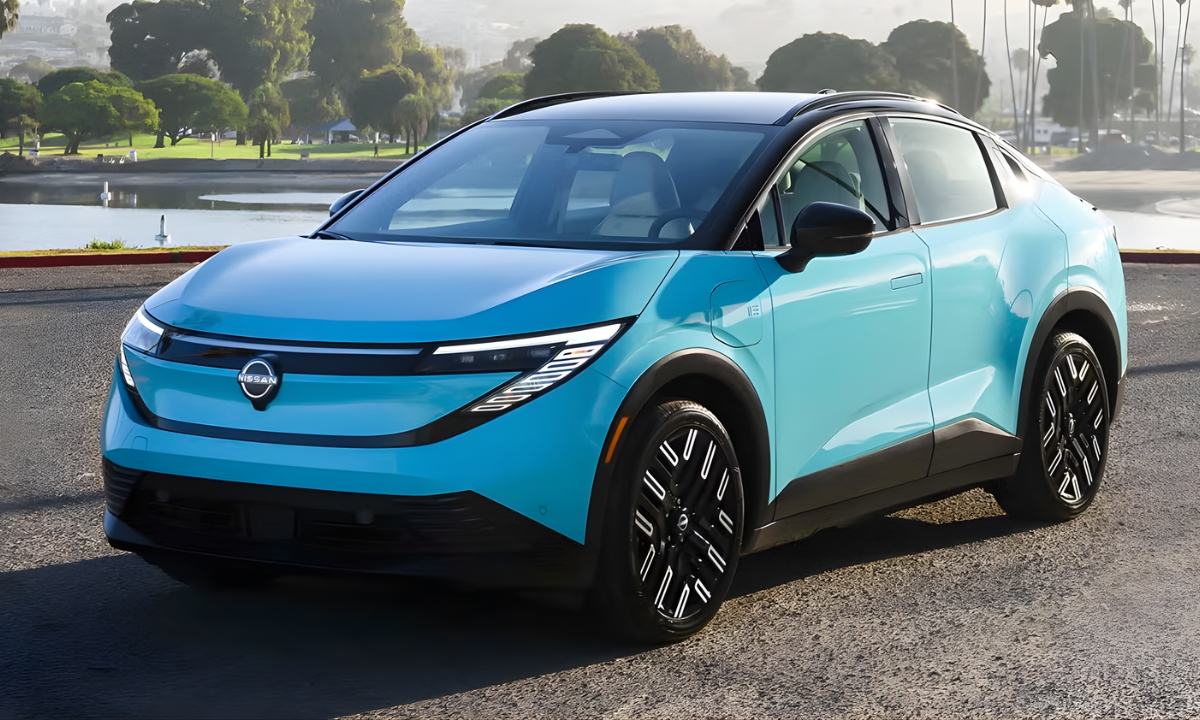
The 2026 Nissan Leaf is a highly remarkable electric vehicle among the usual drivers. It remains cheap and it includes helpful changes. Nissan has developed its expertise in EVs since its Launch in 2010 but this time it has enhanced the efficiency and the city-friendly design of the Leaf. Following the reelection of President Trump, Leaf will be made by new incentives in the U.S., which will increase domestic production, and this is why inside the Leaf, the car is witty to buy when a family desires a car in March 2026.
Nissan revised the appearance of the 2026 Leaf. Aerodynamic, sleeker LED headlights and low front would cut down drag by 5 per cent. The interior has a panorama roof that is airy. The recycled seats ensure that the cabin remains light and environmental friendly without compromising the comfort when traveling long distances. The most modern software is managed by an 12.3-inch touchscreen, and the voice recognition and over-the-air updates are very user-friendly.
Its practicality is overboard with 30 cubic feet of cargo and 60 cubic feet of cargo when the rear seats are folded down- excellent when it comes to purchasing groceries or even weekend gears. Leaf is a quiet rider due to enhanced sound insulation. There is also an optional heated steering wheel that comes in handy during cold mornings. Nissan comes in with ProPILOT Assist 2.0, which is the safety feature that handles highway lane-changes. Crash tests conducted by other independent organisations have given it high ratings in responsive braking.
The front-motor of the 2026 Leaf has 214 horsepower on the top-tier performance and drives a 62-kWh battery pack that will cover a distance of 363 on an EPA rating. In the model S+, the 40 Pack gives it the range of 226 miles, which is an excellent range considering that the city drivers can recharge the car at night. Rapid charging currently goes up to 130kW and charges the battery 80 percent in under 40 minutes at compatible stations- far much faster than previous versions.
The e -Pedal also has regenerative braking that allows drivers to slow or halt using solely the accelerator because it enhances efficiency. In the real-life test, the Leaf consumes 3.2miles on mixed routes per kilowatt hour a superior highway range compared to the Chevy Bolt. The chemistry of the battery used in Nissan undergoes modifications, which maintains a degradation below 10 percent after 100 notches.
Trim Price (incl. dest.) Battery Distance (EPA) Fast Charge (10 80)
| Trim | Starting Price (incl. dest.) | Battery | Range (EPA) | Fast Charge (10-80%) |
|---|---|---|---|---|
| S+ | $31,535 | 40 kWh | 226 miles | 35 minutes |
| SV+ | $35,775 | 49 kWh | 289 miles | 38 minutes |
| Platinum+ | $40,535 | 62 kWh | 363 miles | 40 minutes |
The Leaf 2026 features inbuilt Google navigation and applications, as well as wireless Apple Car Play as a phone reflection. Tight parking is aided using a 360-degree camera. A V2L outlet has the ability to operate home appliances as high as 1.5 MW- excellent in terms of tailgating or power outages. With over 20 driver aids including blind spot intervention and rear-cross traffic alerts, you are safe.
Charging plates eliminate phone wires. There is a 10-speaker Bose system which provides clear sound. Bidirectional charging allows the Leaf to charge tools in your garage. The ambient lighting can be night-time customized.
The S+ trim begins at $31,535, which is cheaper than the majority of the competitors. Buyers are able to save even more with the federal tax credits of up to 7,500 dollars. The fully equipped platinum plus seats are in the 41,000 area. in high-EV states, it is possible to lease at below 300 a month. It is estimated that, over five years, maintenance expenses are as low as 40% that of gas cars because of the reduced number of moving components and an eight-year warranty on the battery offered by Nissan.
Electricity will cost on average one thousand two hundred US dollars per year, whereas fuel will cost three thousand dollars on the same gasoline sedans. Three years later, Leaf retains beverage of 60 percent of its value due to the high demand of used EV. The switch was also safer as trade-in values increased 15 per cent following the introduction of incentives in 2025.
Some of the new features that come with 2026 include an updated heat pump that extends cold-weather range by one-fifth. Other models can also test solid-state batteries to ensure future-proofing. Nissan boasts of 12 percent total efficiency improvement, which was confirmed by independent laboratories. The Leaf is cheaper and more reliable than Hyundai Kona Electric or VW ID.3, and the number of reported problems in the questionnaires of J.D. Power is smaller.
Being manufactured in the U.S. the Leaf can accommodate the existing policy incentives, and attract both pragmatists and patriotic customers. In the city, drivers like the fact that it is not very bulky and may accelerate briefly making them immensely confident that it will not run out of range.
FAQs
Q1: What is the range of the Leaf in a single charge?
It is also able to cover a distance of up to 363 miles in the best trim which qualifies it to be used in long distance journeys.
Q2: Does Leaf qualify on EV rebates?
Yes, shoppers are allowed a maximum of a $7,500 federal tax credit.
Q3: What does the warranty cover?
The battery has eight years of coverage or 100, 000 miles.